Proposal, Recommendation, Decision: Where Does a Public Idea Stand?
Proposal, recommendation and decision mark different points in public action. Learn what to check each week so you can tell what is settled and what remains open.

A proposal, recommendation and decision are not three ways to describe the same public action. If you are following a council’s plan for a new crossing, the proposal may introduce the idea, a recommendation may advise what to do, and only a formal decision may settle the matter. Knowing the difference helps you judge what is still open and when a response might count.
What does each term tell you?
A proposal is an idea put forward for consideration. It might come from a councillor, a committee, an officer or a member of the public. A proposal can be detailed, but detail does not make it approved. Look for who submitted it, what action is being suggested and which body, if any, is being asked to consider it.
A recommendation is advice about a possible course of action. A committee might recommend that a council approve a scheme, revise it or take no further action. The recommendation records a preferred option, not necessarily the authority to carry it out. Check whether the body receiving the advice has yet considered it.
A decision is an outcome made by the person or body authorised to act. The record may say that a motion was agreed, an application refused, or a matter deferred. Read the exact wording: a decision to request more information settles that immediate question, but it does not settle the underlying proposal.
Think of the terms as a parcel moving through a building. A proposal is placed at reception, a recommendation is a note directing it to a particular desk, and a decision is the authorised response. The route matters because a parcel at one desk has not necessarily reached its destination.
How can you follow a public idea over a week?
Use a short routine rather than relying on one headline or a single meeting. Choose the relevant council, board or committee, then follow its published papers and decision records through the week. The aim is to identify the current stage, not to predict the result.
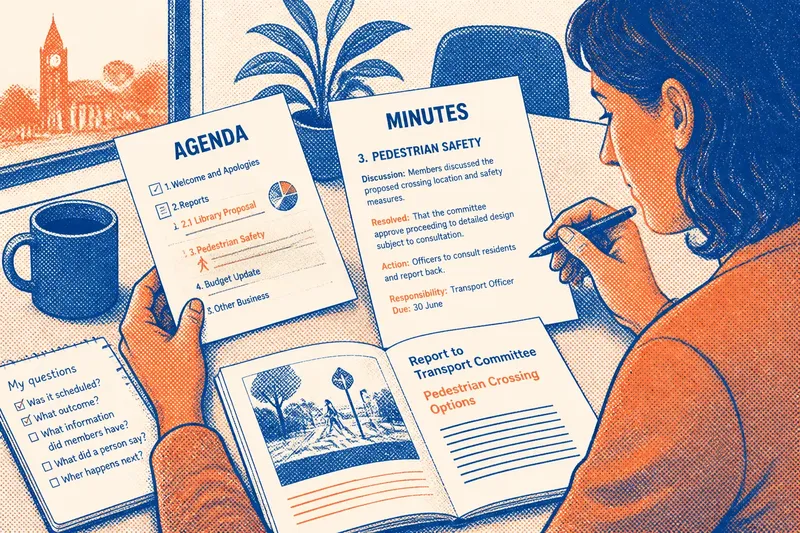
- At the start of the week: Search the body’s website for the proposal, report or application number. Note the title, responsible body and next scheduled point of consideration.
- Before the meeting: Read the relevant report and its recommendation. Mark any alternatives, conditions or questions the body is being asked to resolve. An officer’s recommendation is not the same as a vote by elected members.
- On the meeting day: Check the published agenda and, if available, the meeting stream or live updates. Listen for whether the item is discussed, amended, deferred or withdrawn. A scheduled item can change once the meeting begins.
- After the meeting: Look for the decision notice, committee record or other formal outcome. Compare its wording with the original proposal and recommendation, and note any conditions or follow-up actions.
- Later in the week: Check whether the decision has a next stage, such as a referral to another body or a further report. Record that stage separately instead of treating it as part of an outcome that has not yet happened.
Say you are following a proposed crossing near a library. A transport committee report recommends a trial, but the committee asks for a revised safety assessment and defers the item. The useful description is that the proposal remains under consideration and no approval has been recorded—not that the crossing has been approved because the report favoured it.
Which questions help you locate the current stage?
Does a recommendation mean the proposal is approved?
No. It indicates advice or a preferred course, while approval depends on the authorised decision-maker taking the required action. Find the later record or decision notice before describing the proposal as settled.
Can a decision leave the main issue unresolved?
Yes. A body can decide to defer an item, seek further advice or ask for changes. That is a decision about what happens next, not necessarily a final decision on the original idea.
What if a public statement differs from the meeting record?
Compare the statement’s date and wording with the formal record, and check whether it describes a recommendation, an interim action or an adopted decision. If the record is unclear, ask the relevant public body which outcome was formally recorded.
Who has authority to make the decision?
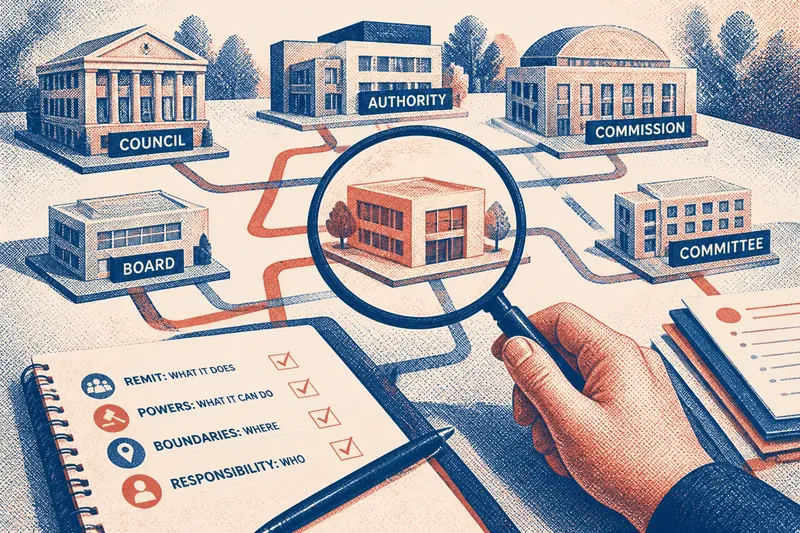
Look at the committee’s stated remit, the report’s decision route and any delegation mentioned in the papers. Authority may rest with a committee, a named office-holder or another body, so the report’s recommendation alone cannot identify the final decision-maker.
What language should you use when you share an update?
Choose verbs that match the record. Say that an idea was proposed, a committee recommended an option, or an authorised body decided to take a stated action. If the item was deferred, say so. Avoid turning “recommended for approval” into “approved”; the missing stage can change what residents expect and what they may still be able to comment on.
It also helps to separate the decision from its implementation. An approval may authorise work without meaning that work has started. Conversely, a body may direct officers to prepare a further report without approving the proposal itself. Use the recorded action and any stated next step, rather than inferring progress from a confident-sounding announcement.
What should you do if the record is incomplete?
Keep a note of the item’s exact title, meeting date and any reference number, then check the relevant body’s published records again. If the outcome is still unclear, send a brief enquiry asking what was decided, who made the decision and where the formal wording can be found. These details make it easier for staff to answer the specific question.
For a clear account of where a public idea stands, track its proposal, recommendation and decision as separate events. The distinction is useful even when a process moves quickly: the record tells you what has happened, while the next scheduled stage tells you what may still be open.