The Word Consultation Does Not Mean Every Choice Is Open
Understand what public consultation can and cannot promise, so you can read invitations accurately and make comments that address the decision still open.
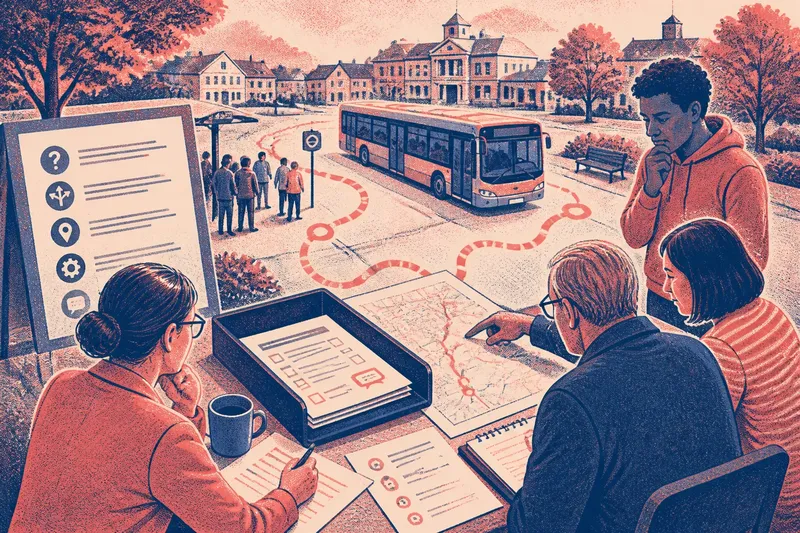
A public consultation may invite you to comment on a proposed bus route while leaving its broad direction already agreed. Understanding public consultation means asking what the invitation actually puts in question, rather than assuming that every choice is open or that comments will be adopted.
“Consultation” describes a process of seeking views. It does not, by itself, say who has the final authority, which parts of a proposal can change, or how much influence a response will have. Those details belong to the decision process and should be stated in the consultation material.
What does public consultation mean?
In plain language, consultation is an opportunity for people to offer views before, during or sometimes after a public body considers a matter. The body might ask about a draft policy, a proposed service change, possible locations or the way a problem has been framed.
An invitation to comment is not the same as a vote. A vote may use a formal rule to determine an outcome. Consultation gathers information and perspectives for people with decision-making responsibility to consider. The distinction matters even when a public body reports that it has “listened” or “taken account” of responses: those phrases describe consideration, not necessarily agreement.
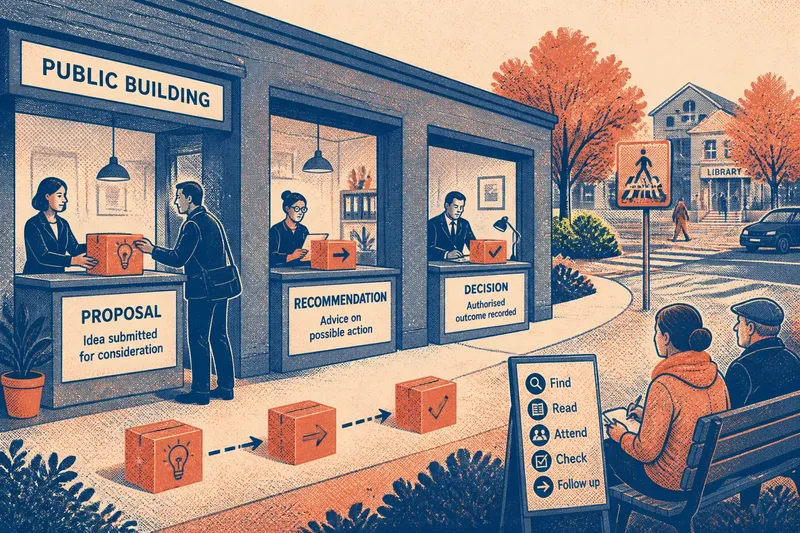
Think of a consultation form as a tray on a desk. It can collect useful material, but placing a suggestion on the tray does not decide what happens next. Someone still has to sort through the submissions, assess them against relevant considerations and make—or advise on—a decision.
Which parts of a proposal may still be open?
A consultation can cover a range of questions, from a basic definition of the problem to details within a settled plan. The invitation should help you tell these apart. Look for phrases such as “options under consideration”, “preferred approach”, “proposed changes” and “final design”. They signal different stages, though their exact meaning depends on the document.
- The problem: Is the public body still asking what needs attention, or has it already defined the issue?
- The options: Are several approaches being considered, or is one preferred option being presented for comment?
- The details: Can the route, wording, opening arrangements or eligibility rules change while the overall approach stays the same?
- The process: Is the consultation about the substance of a proposal, or about how it will be put into effect?
These layers can coexist. A public body might keep the purpose of a scheme fixed while asking which of several locations would work best. A response arguing against the purpose may still be relevant, but it addresses a different question from a response comparing the locations.
Why is an invitation not a promise to adopt suggestions?
Consultation allows a decision-maker to hear from people who may experience a proposal differently from those who developed it. It can reveal practical difficulties, missing perspectives, unclear language or consequences that deserve further attention. But responses are one part of a wider decision, not instructions that automatically determine its result.
A public body may need to consider its stated aims, available options, its responsibilities and the views submitted. It may also receive comments that conflict with each other. One group may favour a change that another considers harmful. The body must weigh those differences rather than simply count which position appears most often, unless a particular process expressly makes a vote or count decisive.
Nor does a consultation necessarily give respondents control over the timetable or authority to make the final decision. The invitation should identify who is running the exercise and, where possible, who will decide what follows. If it does not, the missing information is a reasonable question to raise with the contact named in the material.
Say a council invites comments on a proposed library opening schedule. The draft keeps the library open on weekday evenings but asks whether one evening should shift to a weekend. A resident explains that the draft weekend hours would be difficult for people travelling from a nearby village and suggests a different time. The expected observable result is that the submission becomes part of the material considered; the council may revise the hours, retain the draft or explain why another arrangement better fits its aims. The invitation alone cannot tell the resident which outcome will follow.
How should you read a consultation invitation?
Start with the questions the body is asking, not just the title on the page. Titles are often brief; the detail may sit in a proposal document, response form or accompanying notice. Check the scope, the options presented and what the body says it will do with responses.
- Find the decision in view. Identify what is being considered and whether the material names a decision-maker or decision date.
- Separate settled points from open ones. Note which parts are described as fixed, preferred, proposed or still under consideration.
- Check who can respond and how. Look for the audience, response route, closing date and any stated limits on what can be considered.
- Read the questions closely. A form may ask about particular options rather than invite comments on the entire policy.
- Look for the account of what happens next. The material may say how responses will be analysed, when a decision is expected, or where a later report will appear.
If the scope is unclear, ask a focused question. For example: “Is the location still open to change, or is this consultation about the design within the selected location?” That gives the organiser a specific ambiguity to answer. Keep the reply with the consultation documents so you can understand later statements about the process.
What makes a comment useful to the decision?
A useful response connects a view to the question being considered. State the part of the proposal you mean, explain the reason for your view and, where helpful, suggest an alternative. A concrete account of an effect can be easier to assess than a bare statement of support or opposition.
For instance, if a form asks about proposed changes to a local service, you might identify the particular change, describe who could be affected and explain the circumstances. If you support the aim but object to one detail, say so. This helps distinguish agreement with the goal from agreement with every feature of the proposal.
You do not need to claim that your view represents everyone in your neighbourhood. If you are responding on behalf of a group, say what role you have and how the group formed its position. Clear attribution lets the reader understand whose experience or argument is being offered.
Where the form allows supporting material, provide only what helps explain your point. A long response is not automatically more influential than a concise one. Make the relevant point easy to find, and answer the consultation’s questions directly where you can.
What can happen after responses arrive?
After the response period, the public body may group comments by theme, assess particular issues or prepare a report for the person or body making the decision. It may revise a proposal, keep it as drafted, ask for more information or take another course. The method and timing vary, so avoid assuming that silence immediately after submission means a response was ignored.
A report may summarise common concerns without reproducing every submission. It may also explain which changes were made and why others were not. If you want to follow the outcome, check the consultation page or contact the named office about where its response will be published. Keep a copy of what you sent and any confirmation the form provides.
When the outcome appears, compare it with the questions that were actually open. A proposal that remains unchanged does not, on its own, show that consultation never happened. Equally, a statement that views were considered does not explain how they affected the decision. A clear account should connect the main issues raised with the reasons for the outcome, while recognising that not every comment can lead to a change.
Which questions about consultation need a direct answer?
Does consultation mean a public vote?
Usually, no: consultation invites views for consideration, while a vote uses a defined process to record choices. Check the invitation for any explicit voting rules before treating responses as a binding result.
Can a public body consult on a preferred option?
Yes, an invitation may seek views on a preferred approach while still allowing some details or alternatives to change. Read the scope carefully to see whether the preference is presented as settled, provisional or open to reconsideration.
Can I comment on something the form does not ask about?
You can usually raise a relevant issue through the stated response channel, but the body may explain that it falls outside the consultation’s scope. Ask whether the point will be passed to the appropriate decision-maker if it concerns a separate matter.
Where can I see what happened to my comment?
Look for a consultation response, decision report or other published account linked to the exercise. If none is easy to find, contact the office named in the invitation and ask where the outcome and response summary will appear.
How can you tell what the word promises?
“Consultation” promises less than many readers assume, but it should still tell you that views are being sought for a stated purpose. Its practical meaning comes from the surrounding information: what question is open, who will decide, how responses will be considered and how the outcome will be explained.
When you read public consultation material, separate the chance to contribute from the authority to choose. Then direct your comment towards the live question and keep track of the account that follows. That gives you a clearer basis for judging both your own contribution and the public body’s explanation of its decision.